Donegal Mountain Rescue launches new Drone Unit
In about six months we have built a drone unit from scratch: a thermal drone, four qualified pilots, and the approvals, insurance and training to fly it on real searches.
Team news
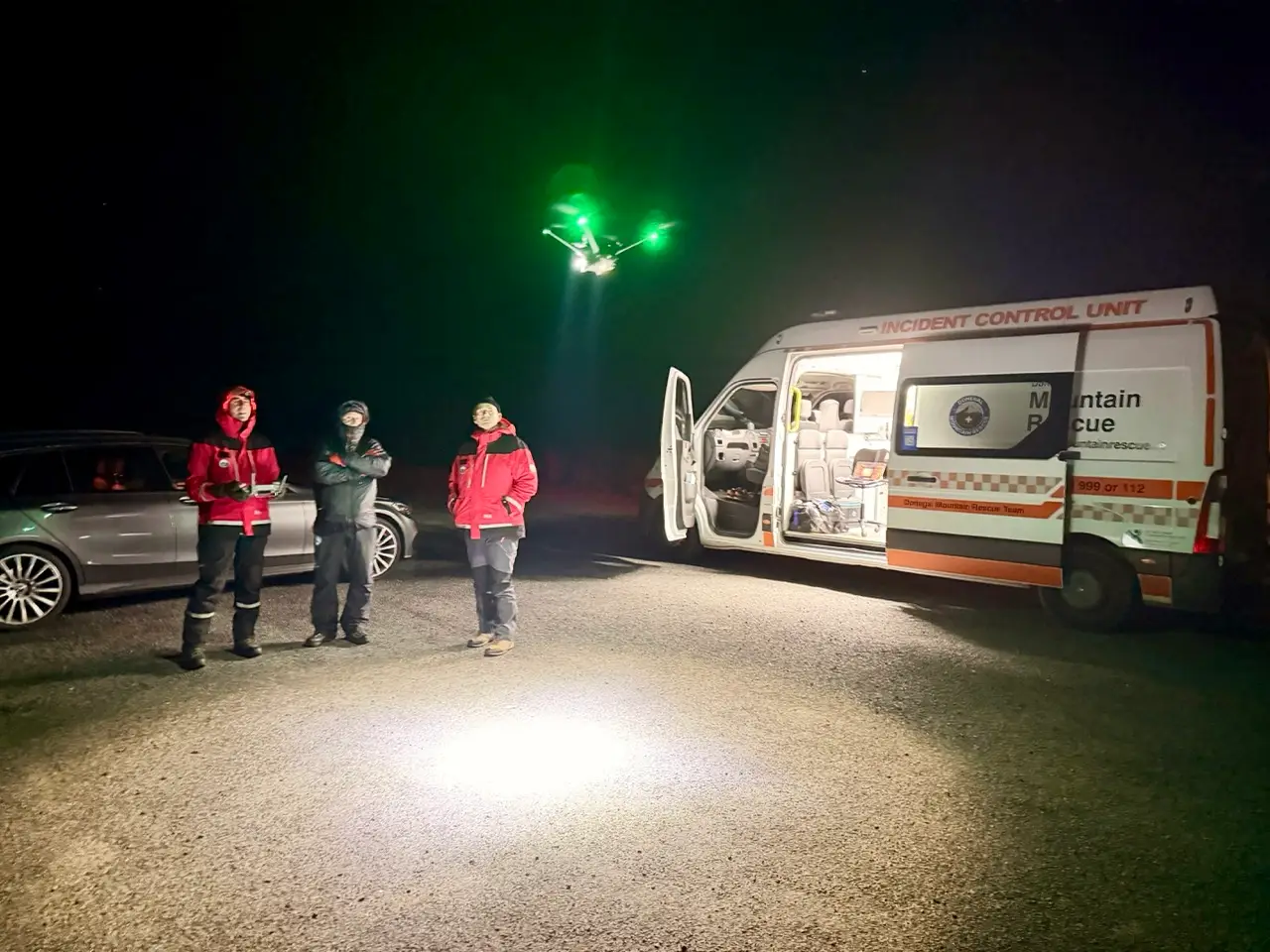
About six months ago, Donegal Mountain Rescue had no drone. Today we have a fully equipped Drone Unit, with trained pilots, ready to fly on real searches.
We built it from scratch. We secured the funding, bought the drone, recruited and trained pilots, and put the approvals, insurance and procedures in place to fly it safely. This is a permanent part of the team, not a trial.
The unit was made possible by a €13,584.50 grant from the Lenalea Community Benefit Fund, awarded towards a drone and the training to fly it. Huge thanks to SSE Renewables.
This grant took our drone unit from an idea to a real capability. When someone is lost or hurt on a Donegal mountain, we can now search faster, and in conditions where our ground teams can't see. That saves time, and in some cases it could save a life.
Searching from the air
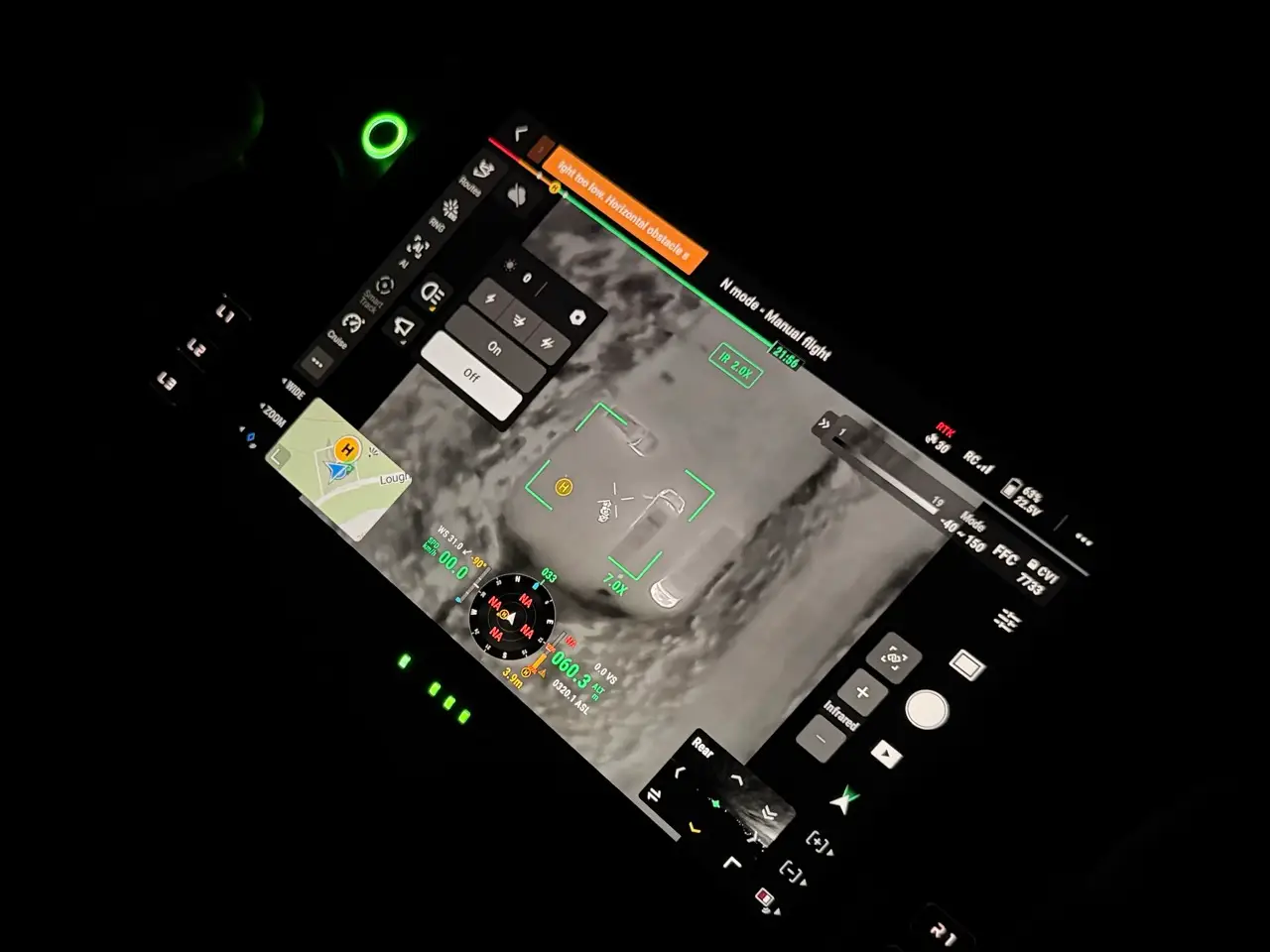
Our drone is a DJI Matrice 4TD. Its thermal camera picks out a person by their body heat, at night or in fog and low cloud. In minutes, it can cover ground that would take a search team hours on foot.
It also has powerful zoom cameras, so the pilot can take a close look at something from a distance. A built-in rangefinder measures exactly where that thing is, and the location goes straight to our search managers.
The drone is built for Donegal weather. It flies in rain and strong wind, and we carry spare batteries so it can keep flying through a long search.
It carries two more tools that help in a rescue:
- A spotlight that lights up a person or an area from the air, and follows wherever the camera points.
- A loudspeaker that lets the pilot talk to someone on the ground. We could reassure a missing or injured person before a ground team gets to them.
Thermal cameras have limits. They cannot see through thick trees, rock or buildings. That is one reason the drone works alongside our hill parties and search dogs, and never replaces them.
Qualified pilots, ready to fly
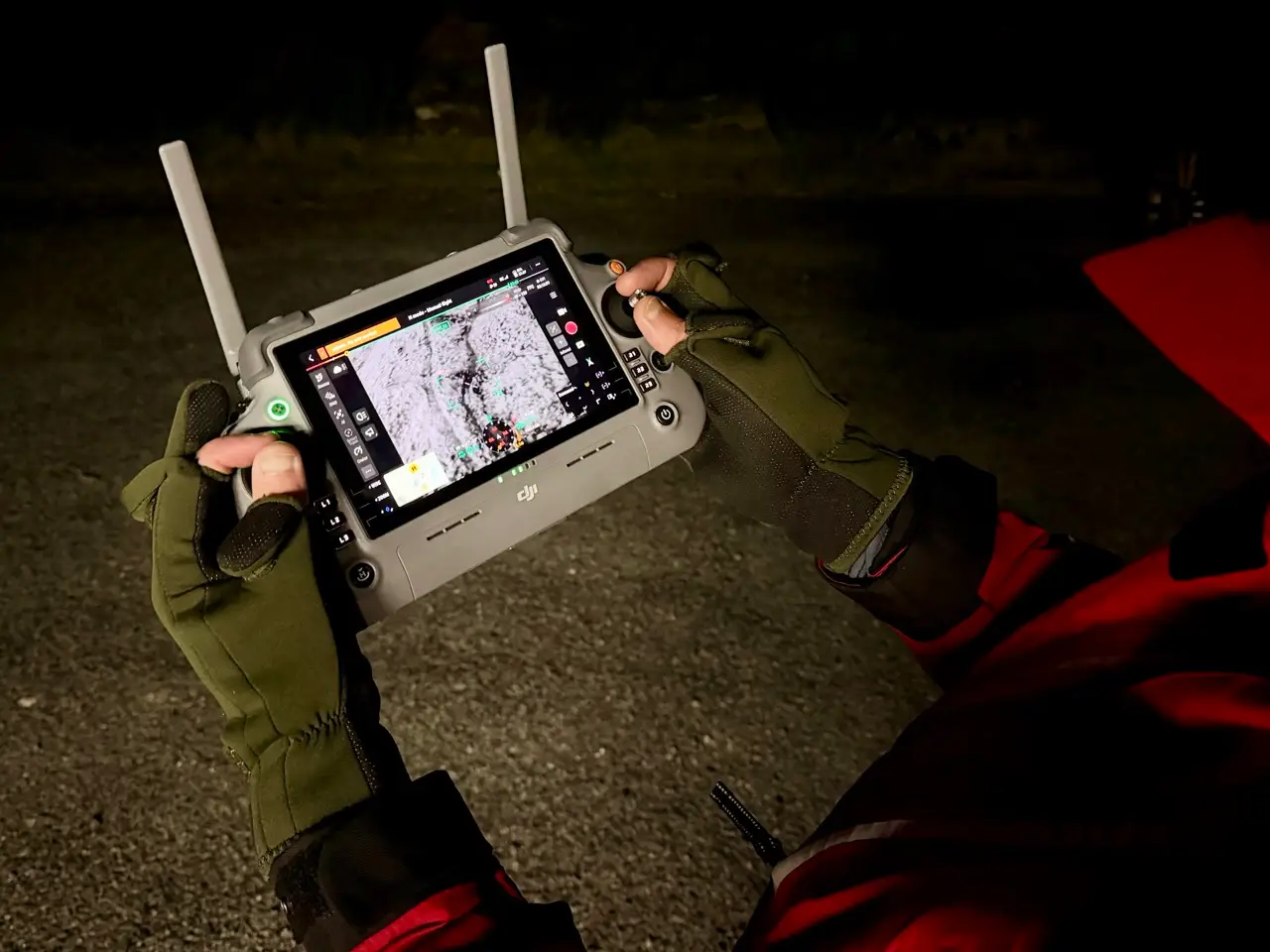
Donegal Mountain Rescue is now registered with the Irish Aviation Authority (IAA) as an official drone operator. The IAA is the body that regulates drone flying in Ireland.
We have four pilots. All four hold the IAA's basic drone certificate. One also holds the advanced certificate, which needs an extra exam and allows flying closer to people. The other three are finishing theirs and waiting for the IAA to confirm them.
All four pilots are ready to fly today. We train together every month, so their skills stay sharp.
Insured, with clear rules for every flight
The unit is fully insured for every flight.
We have also written our operations manual with Safe Drone Academy. It is the rulebook for the unit. It sets out how we fly safely, who does what, how we judge the risks of each flight, and what we do if something goes wrong.
Building a unit that lasts
We don't want the unit to depend on a handful of people. So we are building a clear training path for new drone operators.
It works the same way as every other operational role on the team. A new operator works through a set of training modules. At the end, they take a final assessment. Only when they pass are they signed off to fly on real callouts.
The drone also has to fit into how we run a search. Our search managers can send the Drone Unit out alongside hill parties and search dogs, and use each one where it helps most.
We are also building our own software to help. One example helps crews look through hundreds of aerial photos quickly, so that nothing important is missed.
Our aim is not just to own a drone. It is to build a complete system around it that finds people faster. If you work in data, mapping or machine learning and this sounds interesting, get in touch at info@donegalmrt.ie.
What comes next
Our next big step is permission from the IAA to fly the drone out of our pilots' sight.
Today, the rules say a pilot must be able to see the drone at all times. That limits how far it can search. With this permission, the pilot could guide the drone using its cameras, over much larger areas of mountain. We could search more ground, faster, and reach places that are hard for our team to get to on foot.
During 2027, we also plan to train more pilots through the new training path. And we will keep working to make the drone a normal part of every search we run.
Another tool to help bring people home
A drone will never replace experienced rescuers on the ground.
What it gives us is another view. It can check an area quickly, spot something worth a closer look, give an exact location, and help our search managers make better decisions.
For a volunteer team covering some of Ireland's most remote ground, that could make a real difference.
Thank you again to SSE Renewables, FuturEnergy Ireland and the Lenalea Community Benefit Fund for making this possible. And thank you to our own volunteers, who are giving their time to train and build this new part of the team.
Winter Appeal 2026
Help us light the way this winter.
Kit and training for our volunteers this winter.
Loading the totalraised of our €3,500 target
Ends 31 December
Our target is €3,500. Ends 31 December.
Everyone on our team is a volunteer.
No one on the team is paid. Your donation pays for the ropes, radios, vehicles and training behind every callout.
About Donegal Mountain Rescue
Since 1984 Donegal Mountain Rescue volunteers have provided search and rescue across Donegal's mountains, hills and remote areas, 24 hours a day, 365 days a year, free of charge to anyone who needs them. Donegal Mountain Rescue Team is a registered charity and part of Mountain Rescue Ireland.
About SSE Renewables
Lenalea Wind Farm is a seven-turbine wind farm about 10km southwest of Letterkenny, owned by SSE Renewables and FuturEnergy Ireland and operated by SSE Renewables. Every year, the wind farm pays into a fund for the surrounding community, based on how much electricity it generated the year before.
About DJI
DJI is the world’s leading manufacturer of unmanned aerial vehicles (UAVs) and camera stabilisation systems.